
Contact Us:

670 Lafayette Ave, Brooklyn,
NY 11216

+1 800 966 4564
+1 800 9667 4558

MODULE 1: MANAGEMENT FOUNDATIONS
About Course

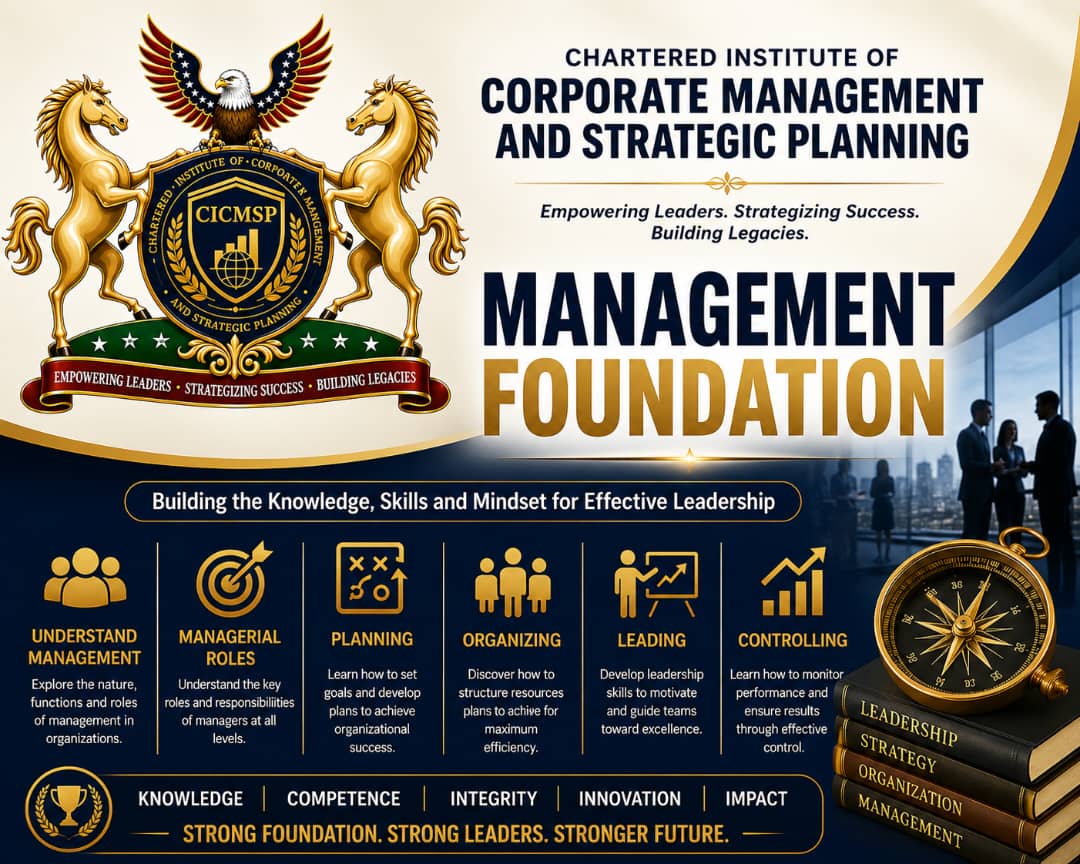
Management Foundations introduces learners to the fundamental concepts, principles, theories, and practices of management. The course explores the roles and responsibilities of managers, major management functions, organizational structures, decision-making, leadership, and the application of classical and contemporary management theories in corporate organizations.

What Will You Learn?

  • By the end of this course, learners should be able to:
  • Explain the meaning, nature, and importance of management.
  • Identify and describe the major functions of management.
  • Explain the contributions of Taylor, Fayol, Weber, and other major management theorists.
  • Apply classical management principles to modern organizational situations.
  • Explain different forms of organizational structure and their relationship with corporate strategy.
  • Identify and evaluate the various roles performed by managers.
  • Compare different approaches to managerial decision-making.
  • Explain the concept of bounded rationality and its implications for management decisions.
  • Apply management principles to practical corporate and organizational situations.
  • Evaluate management practices and their relevance to contemporary organizations.

Course Content

UNIT 1: CMSP-PGD-PPM 701 PRINCIPLES AND PRACTICES OF MANAGEMENT
This module examines the core principles and practices that guide effective management in organizations. Learners will explore the contributions of major management theorists such as Frederick Taylor, Henri Fayol, and Max Weber, as well as management functions, organizational structure, managerial roles, strategic decision-making, and the practical application of management principles in corporate settings.

UNIT 2: CMSP-PGD-ME 102 MANAGERIAL ECONOMICS
Learning Outcomes • Apply demand and supply analysis to corporate pricing decisions. • Analyze cost and production relationships and their strategic implications. • Evaluate market structures and their effect on competitive strategy. • Interpret macroeconomic indicators and business cycle phases for strategic planning purposes.

UNIT 3 :FINANCIAL AND MANAGEMENT ACCOUNTING
Learning Outcomes • Analyze and interpret corporate financial statements using ratio and trend analysis. • Apply budgeting and budgetary control techniques to corporate planning. • Evaluate working capital management practices and their strategic significance. • Use financial and management accounting information to support strategic decision-making.

3.1 Financial Statement Analysis and Interpretation

UNIT 4: BUSINESS LAW AND CORPORATE GOVERNANCE
Learning Outcomes • Explain the essential elements of a valid contract and their application to commercial transactions. • Analyze remedies available for breach of contract in a corporate context. • Evaluate company law principles governing incorporation, directors' duties, and shareholders' rights. • Assess corporate governance frameworks and the strategic role of the board in organizational oversight.